

Speakers, board members, staff, VIPs: at a congress, some rooms are paid for by the organizer. Here are 4 ways to set it up, and what to decide before bookings open.
Ten days before the congress, a speaker writes: he still has no room. He thought you were booking for him. You thought he had received the link. In between, a shared spreadsheet, 3 versions and a “paid by” column nobody dares to edit any more.
The problem rarely comes from the hotel. It comes from a question left vague: who pays for what, and who books?
Who pays for speaker accommodation at a congress?
Most often, the organizer pays for all or part of the rooms of speakers, board and staff, and delegates pay for theirs at a negotiated rate. The real decision is the rule for each group: how many nights, what cap, and who books.
Start by sorting your guests
A congress does not house one audience, it houses several. Speakers and board members expect a journey with nothing to pay upfront. Staff need rooms in the same place, for the whole duration. Delegates pay for their own room and mostly want a good rate near the venue.
As long as these groups go through the same link and the same conditions, exceptions are handled by email. That is where mistakes begin.
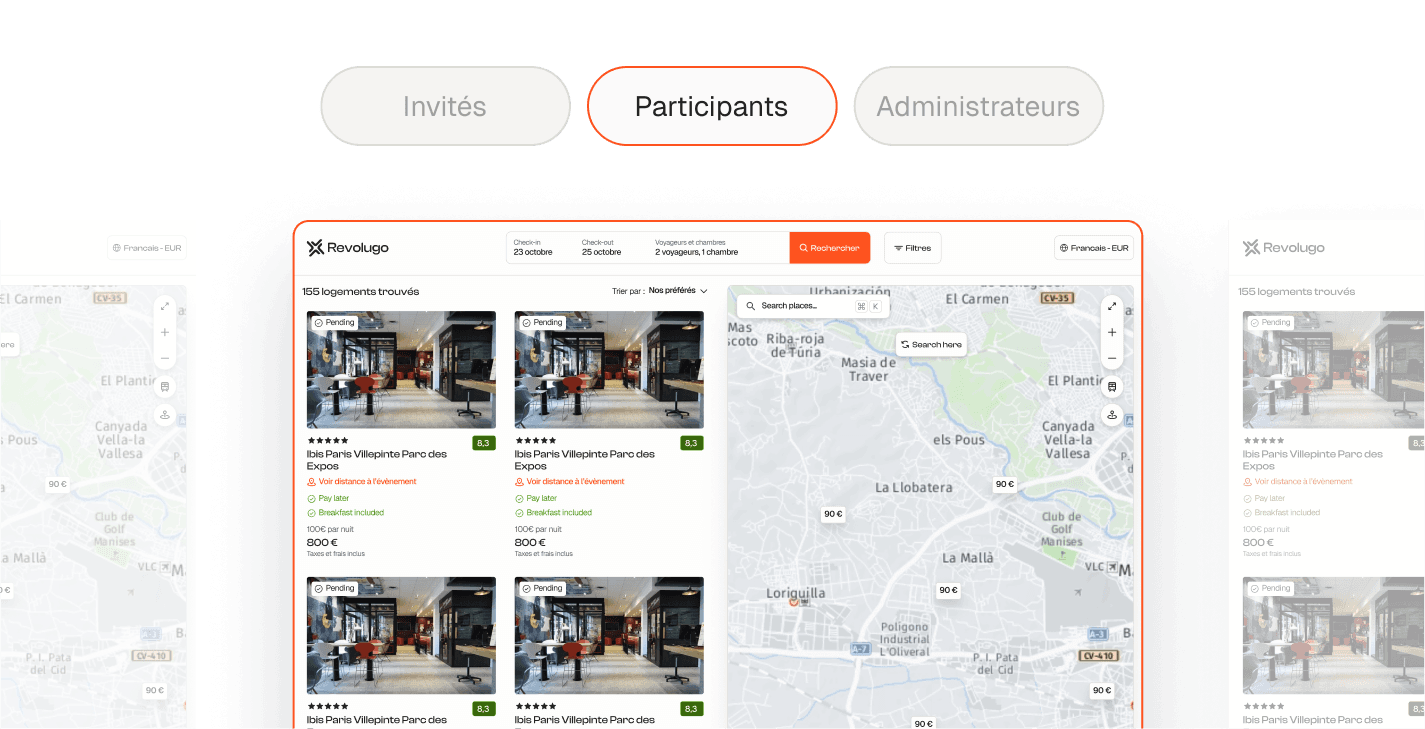
Four ways to cover your guests’ accommodation
1. You pay for everything
The guest picks dates within the frame you set, books on their own and never takes out a card. It is the most comfortable option for a speaker. It is also the most expensive if the frame is unclear: number of nights, room category, breakfast.
2. You pay for part of it
Two nights covered, the third paid by the guest. Or a capped amount. The rule must be written before opening, and applied by the tool rather than by an email thread.
3. You hand out coupons
Each guest receives a code that covers all or part of the stay. You know at any time who has used it, and who has not booked yet.
4. The guest pays, on your terms
Nothing is covered, but the guest gets private access to negotiated hotels and rates, with the right payment method: card, bank transfer, invoice to a company.
These 4 options can be combined. Nothing stops you from covering 3 nights for speakers, housing staff in full and letting sponsors pay for their rooms on a platform reserved for them. This is what we set up for congresses and conferences.
What ISBT put in place
The congress of the International Society of Blood Transfusion brings together speakers, board members, staff and delegates. Each group had its own journey: no payment and personalized assistance for speakers and the board, allotments and centralized management for staff, a shared hotel offer for participants. A Revolugo accommodation desk was on site throughout the congress for last-minute requests.

The result of the first edition: more than 1 million euros in volume generated, and a partnership renewed for the following editions.
Five points to settle before opening
- The list of groups, with one person in charge of each.
- What is covered for each: nights, amount, extras.
- Who books: the guest, or you on their behalf.
- The date after which an unbooked room is released.
- The person who answers during the event, and until what time.
If these 5 points fit on one page, the rest is execution. If they do not, the shared spreadsheet will be back ten days before the event.
Once the rules are set, the room list still has to be kept: see how to keep a rooming list without a spreadsheet. And if you are preparing a congress, let’s talk about your project.
Frequently asked questions
Who pays for speaker accommodation at a congress?
Usually the organizer, in full or in part. The organizer sets in advance the number of nights, the room category and the extras covered. Delegates pay for their own room, most often at a rate negotiated by the organizer near the venue.
What is the difference between reimbursing expenses and paying directly?
With reimbursement, the speaker pays upfront and is refunded on receipts. With direct payment, the organizer settles the hotel and the speaker has nothing to advance. Direct payment avoids expense claims and forgotten bookings.
Can only part of the stay be covered?
Yes. The organizer can cover a number of nights, cap an amount or hand out a coupon. The guest pays the rest when booking.
When should guest bookings open?
As soon as the list of groups, the rule for what is covered for each and the room release date are settled. Opening earlier means handling exceptions by email.
Updated on



 Edward Grunwald · 15 June 2026 · 3 min read

 Mathilde Manson · 10 September 2025 · 3 min read